
Lose something precious in coastal Karnataka and someone will tell you, almost without thinking, to “ask Koragajja.” Across Tulu Nadu, this guardian spirit is the first name on people’s lips when something is lost, when justice feels far away, or when a problem has no easy answer. He’s not a distant god. He’s the deity who listens to ordinary people, and his story is one of the most moving in the entire Daiva tradition.
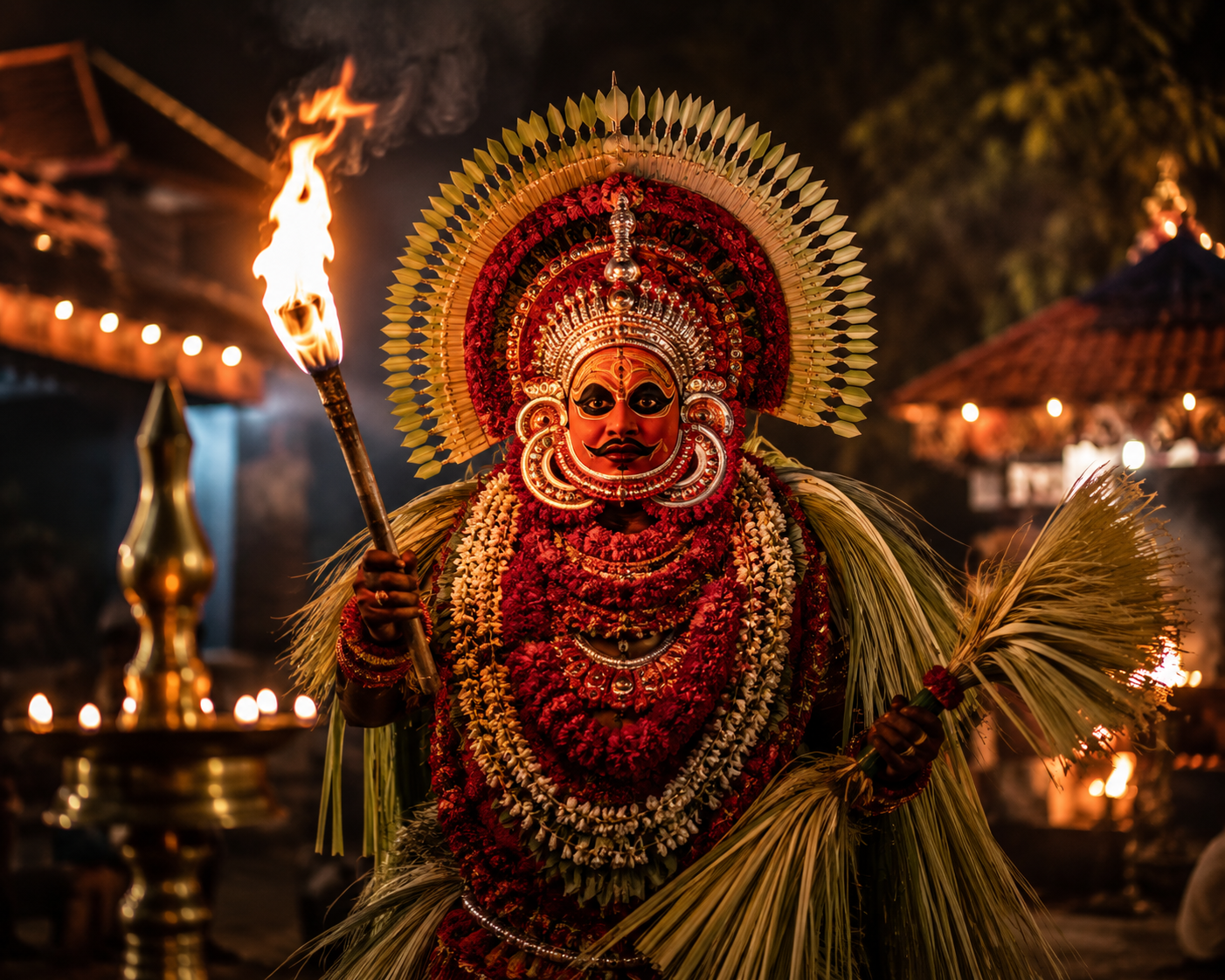
Koragajja is one of the most revered daivas, the guardian spirits, of Tulu Nadu, the coastal belt around Mangalore and Udupi. In the local faith of Daivaradhane, daivas are protective forces who watch over land, families and communities. Koragajja stands apart for being seen as a spirit of the common person, approachable, quick to help, and fiercely tied to fairness and justice.
The story begins with a child named Koraga Thaniya, born into a poor family and raised by a foster mother, Bairakke, who sold toddy to survive. Thaniya grew into a young man of remarkable strength and courage, yet he faced relentless discrimination because of his lower-caste birth. His honesty and bravery, though, earned him a reputation that spread well beyond his village.
According to the legend, Thaniya crossed a sacred boundary, said to involve the temple’s ritual vessel, an act forbidden to someone of his standing. What followed, in different tellings, is either a miraculous disappearance or his death. Either way, his spirit did not fade. It rose, and the outcast youth became a daiva, worshipped for the very strength and righteousness the world had denied him in life.
Here’s what makes Koragajja’s legend so powerful: a person pushed to the margins of society became a god the whole society now turns to. For generations of devotees, that reversal carries real meaning. It says that dignity isn’t decided by birth, and that justice, sooner or later, finds its way. People don’t just pray to Koragajja, they relate to him.
Koragajja is honoured through Bhoota Kola, the night-long ritual performance at the heart of Tulu spirit worship. A trained performer, after elaborate preparation, takes on the form of the daiva, with face paint, costume, fire and the steady pulse of drums. In that state, the daiva is believed to speak directly to the gathered community, settling disputes, blessing families and answering pleas.
If the imagery feels familiar, it’s because films like Kantara brought this tradition to a national audience. But for Tulu Nadu, Bhoota Kola was never folklore, it’s a living faith, practised long before any camera arrived.
People come to Koragajja with the problems they can’t solve alone. He’s especially called upon for:
Devotees often make a vow, promising an offering once their wish is granted. The faith that he delivers, sometimes in uncannily specific ways, is exactly why his name spreads from one family to the next.
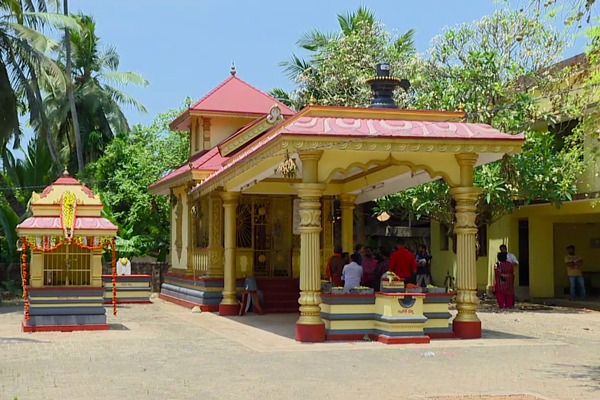
Koragajja shrines, often simple and set among trees, dot the region around Mangalore, Udupi and Kundapura. Offerings tend to be modest and rooted in his humble origins, items like beedi, toddy and coconut are traditional, though customs vary by shrine. The respectful way to engage is to follow local guidance, keep a quiet bearing, and let the community lead. This is faith, not spectacle.
Koragajja is a beloved guardian daiva (spirit deity) of Tulu Nadu in coastal Karnataka. Born the outcast youth Koraga Thaniya, he became a worshipped spirit known for justice and for helping ordinary devotees with lost items and personal troubles.
Koragajja is honoured through Bhoota Kola, a night-long ritual where a trained performer embodies the daiva and is believed to speak to the community. This living tradition of Tulu spirit worship gained wider fame through films like Kantara.
Koragajja is widely believed to help recover lost or stolen valuables and deliver justice. Devotees often make a vow, promising an offering once their wish is fulfilled, and his reputation for results is why his name passes from family to family.
The Daiva traditions are everywhere in this part of Karnataka, woven into village shrines, festivals and everyday life. Basing yourself on the coast, near Mangalore and Mulki, like at Palm Breeze Beach Resort in Mukka, makes it easy to experience Tulu Nadu’s culture up close, with respect and curiosity.
