
Mangalore is one of those places where the food alone justifies the trip. Sitting between the Arabian Sea and the Western Ghats, the region pulls together three distinct kitchens, the Tuluva, the Konkani (GSB) and the Beary, and the result is coastal cooking that’s bold, coconut-rich and unapologetically spicy. Fresh catch, ground masalas, curry leaves crackling in coconut oil. You smell it before you taste it.
Here’s what to order, and a little about why each dish matters.
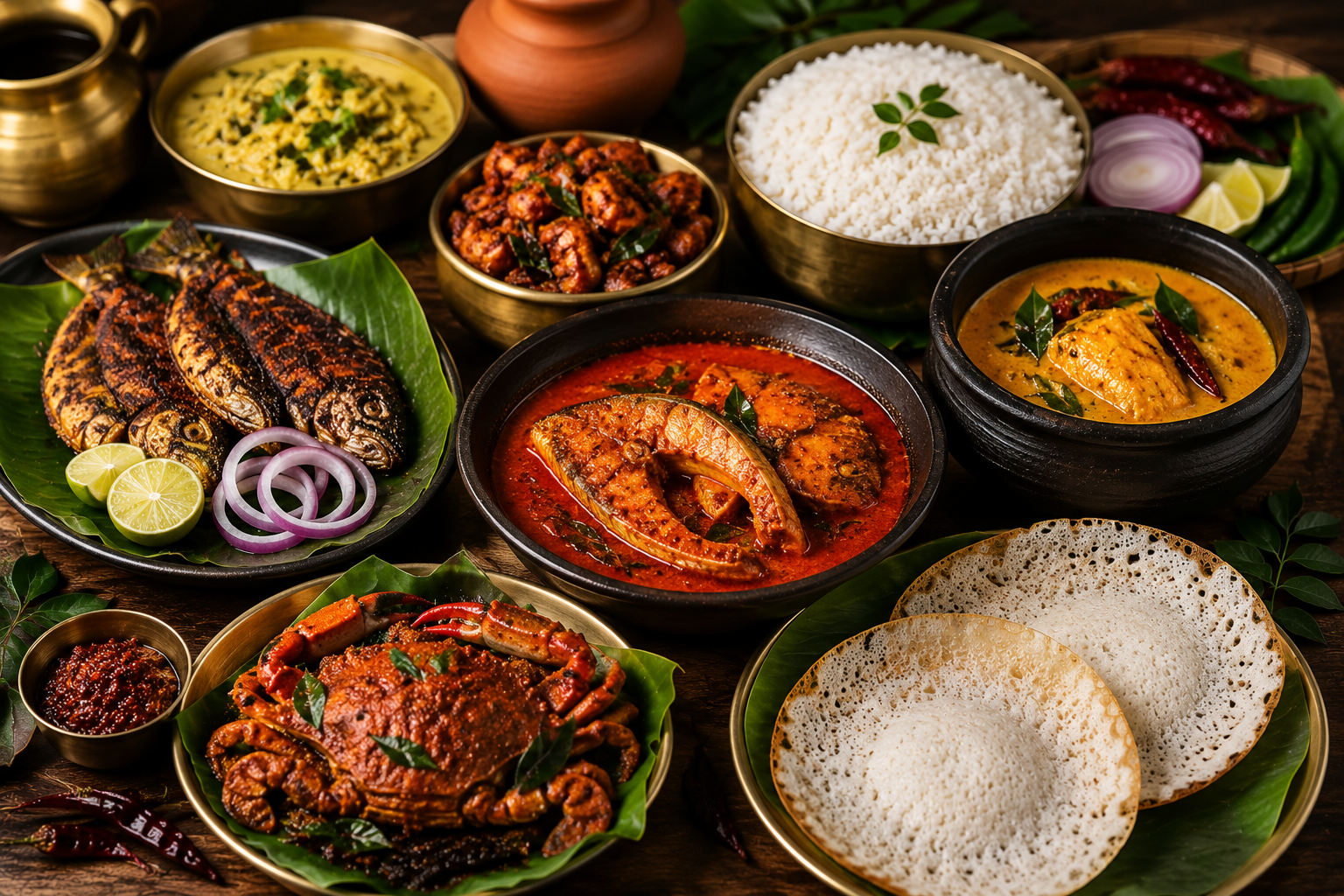
Start your morning with neer dosa. The name means “water dosa,” and that’s almost literal, the batter is thin, unfermented rice and water, poured into a hot pan to make soft, lacy crepes. There’s no sourness, just a clean, mild taste built to soak up whatever you pair it with. Have it with coconut chutney for breakfast, or with a fiery chicken curry for lunch. It’s deceptively simple and completely addictive.
Ask any Mangalorean about kori rotti and watch their face change. This is the signature Bunt dish, a spicy red coconut-based chicken curry (kori gassi) poured over wafer-thin, crisp rice wafers (rotti). The wafers soak up the gravy and go soft, so every bite mixes crunch and curry. It’s rich, it’s hot, and it’s the one plate locals will insist you try before anything else.
This one travelled. Born in nearby Kundapura, chicken ghee roast is now on menus across the country, but it tastes best at the source. Chicken is cooked down in a freshly ground masala of dried red chillies, tamarind and spices, with generous ghee giving it a deep, glossy, almost nutty finish. It’s spicy and tangy in equal measure. Mop it up with neer dosa or a soft Mangalore bun.
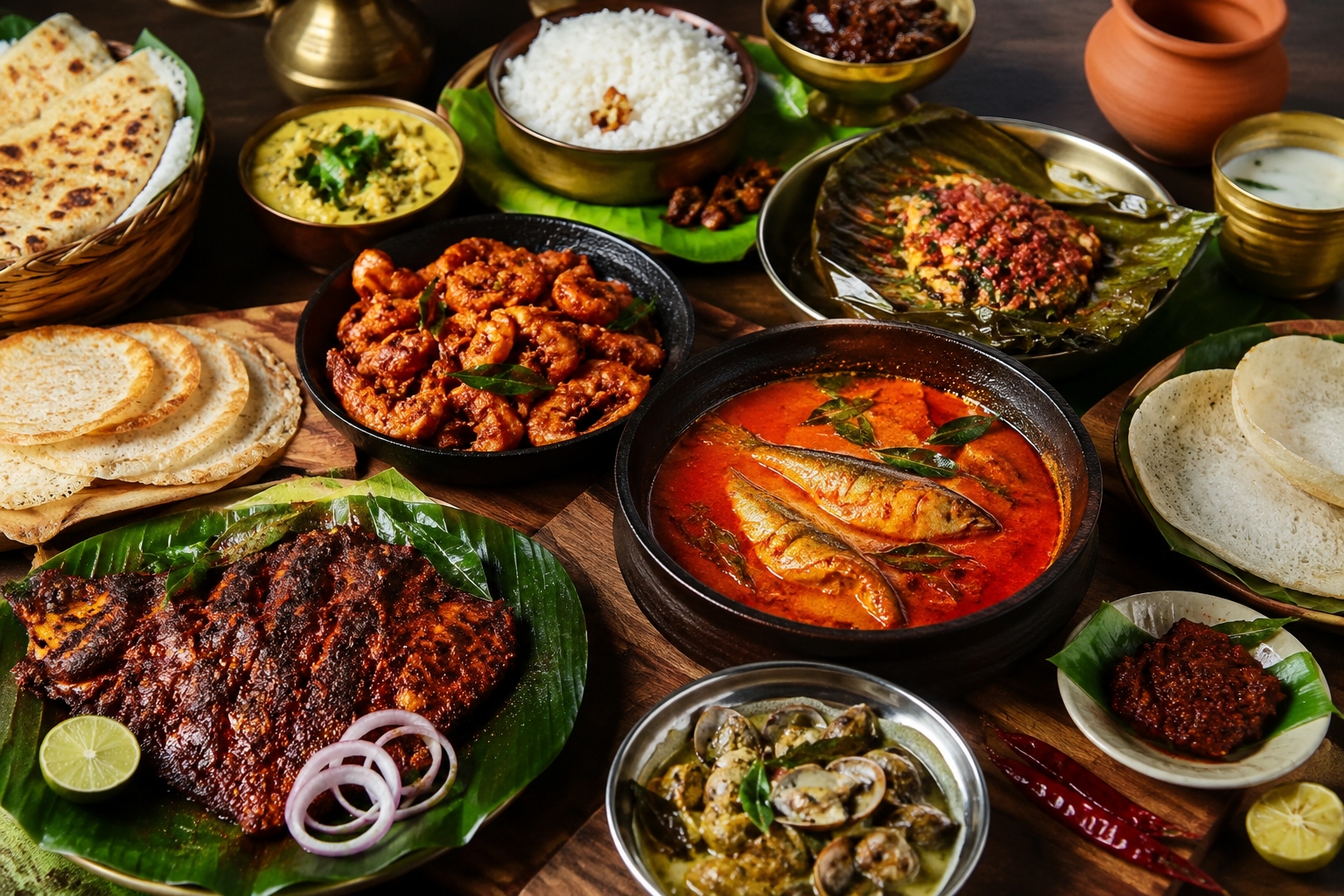
With the sea on its doorstep, Mangalore does fish like few places in India. The local favourite is a tava fry, the catch marinated in a red chilli and spice paste, coated in fine semolina (rava), and shallow-fried until crisp outside and flaky within. Look out for these:
A beachfront restaurant with the day’s catch is the way to do this properly. Fresh fish, sea breeze, no fuss.
Beyond the headline dishes, Mangalore’s home cooking is where the soul is. Pundi (steamed rice dumplings) are a breakfast staple, sometimes simmered with cockles and coconut into a creamy dish called marwai pundi. Patrode is another local hero, colocasia leaves smeared with spiced batter, rolled, steamed and then sliced and fried. Both are humble, vegetarian-friendly and rarely found outside the region.
Save room. Goli baje, soft, tangy fried fritters, are the classic tea-time snack, and Mangalore buns, slightly sweet banana-based puris, are a breakfast treat you’ll want again. Then there’s Gadbad, the city’s legendary layered ice cream of fruit, jelly, dry fruits and scoops in a tall glass. It was invented here, it’s award-winning, and no food trip to Mangalore is complete without one.
Mangalore is famous for neer dosa, kori rotti, chicken ghee roast, fresh coastal seafood like anjal and bangude fry, and Gadbad ice cream. The cuisine blends Tuluva, Konkani and Beary cooking, with coconut and red chillies at its core.
Yes, much of it leans spicy thanks to dried red chillies and freshly ground masalas. You can ask for a milder version at most restaurants, and dishes like neer dosa and Gadbad ice cream balance the heat nicely.
Vegetarians can enjoy neer dosa, pundi, patrode, goli baje, Mangalore buns and a range of coconut-based vegetable curries. The GSB and Tuluva kitchens both offer plenty of authentic meat-free dishes, so you won’t go hungry.
The best way to eat Mangalorean food is fresh and by the sea. Staying at a beachfront spot like Palm Breeze Beach Resort in Mukka, with its non-vegetarian coastal restaurant, puts the day’s catch and these local flavours right where they belong, next to the waves.
